
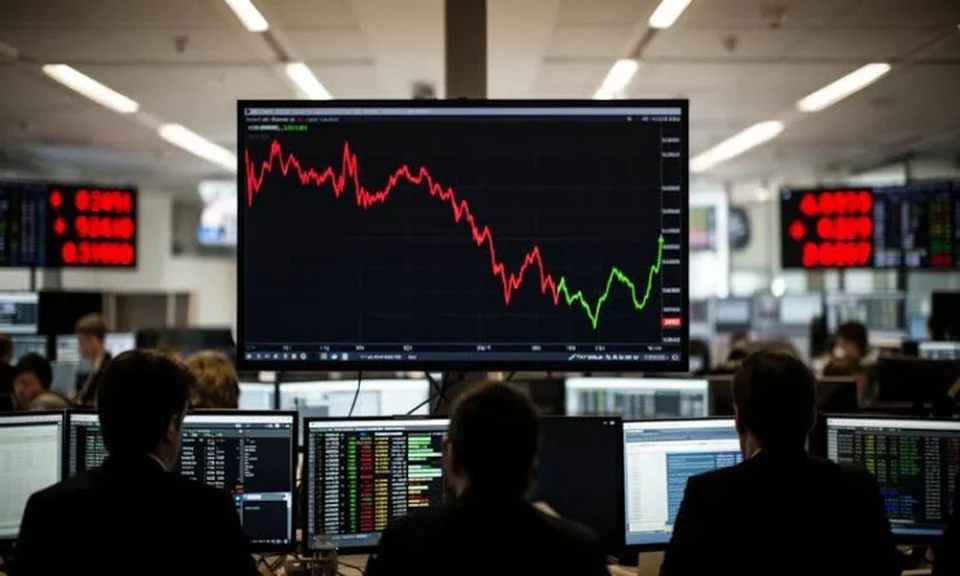
Trading often looks deceptively simple from the outside. A chart moves, a trader identifies an opportunity, an order is placed, and the position either works or does not. In practice, consistent trading requires much more than recognising a potentially profitable setup. Traders must interpret market conditions, define risk, select an appropriate entry, execute efficiently, and review the outcome without allowing emotion to distort the process.
An efficient trading process connects each of these decisions. Instead of treating analysis and execution as separate activities, traders can build a structured workflow that reduces unnecessary decisions and makes their actions more repeatable. This approach does not eliminate losses or guarantee results, but it can make the trading process clearer, more disciplined, and easier to evaluate over time.
Start With a Clear Market Analysis Framework
Effective trading begins before an order is placed. Market analysis should establish the broader environment and identify the conditions that could support or invalidate a potential trade. Depending on the strategy, this may involve examining price trends, volatility, economic developments, trading volume, support and resistance levels, or other technical and fundamental factors. The objective is not to predict every market movement, but to develop a defined view of what is happening and why a particular opportunity may exist.
A useful analysis process separates observation from interpretation. For example, a trader might first identify that an asset has been moving within a defined range before considering whether a breakout is developing. This distinction helps prevent assumptions from becoming facts. It also encourages traders to establish specific conditions under which their original idea would no longer be valid. Professional trading practices commonly emphasise preparation, risk controls, and consistency because markets are inherently uncertain and no analytical method is correct all the time.
Timeframe alignment can also make analysis more efficient. A trader may use a higher timeframe to understand the broader trend and a lower timeframe to refine an entry. The exact combination depends on the strategy, but the underlying principle is consistent: each timeframe should have a defined purpose. Looking at too many charts without a clear reason can create conflicting signals and encourage unnecessary trades.
Turn Analysis Into a Defined Trading Plan
Once a potential opportunity has been identified, the next step is converting the market view into an actionable plan. A trading plan should answer several practical questions before capital is placed at risk. Where is the intended entry? What price or market condition would invalidate the idea? Where is the potential exit? How much capital can reasonably be exposed? What circumstances would cause the trader to stay out of the market altogether?
Risk management should be considered before execution rather than after a position has already moved against the trader. Regulators and established financial institutions consistently emphasise that leveraged trading can magnify both gains and losses, making position sizing and risk controls particularly important. A well-defined risk limit gives traders a framework for responding to unfavourable movements without having to make an emotional decision in the middle of a volatile market.
Technology can support this planning process, but it should not replace judgment. Trading platforms can provide charts, market information, order types, alerts, and account-management tools that help traders implement their plans efficiently. Traders comparing platforms and services can visit ADSS to explore available trading resources and consider how they fit into an overall execution process. The important consideration is whether the tools support the trader’s established strategy rather than encouraging additional activity.
Make Order Execution Deliberate and Efficient
Execution is where a trading plan becomes an actual position. Even when the underlying analysis is sound, poor execution can change the risk and potential outcome of a trade. Traders therefore need to understand how different order types work and when each may be appropriate. Market orders prioritise execution, while limit orders provide greater control over the price but may not be filled. Stop orders can also be used as part of an exit or risk-management strategy, depending on the market and platform.
Speed is not always the same as efficiency. In fast-moving markets, rushing to enter a position can cause traders to overlook spread costs, available liquidity, volatility, or the distance between their intended and actual execution price. Efficient execution means acting quickly when the strategy requires it while still checking the factors that materially affect the trade. This becomes particularly important around major economic announcements, when prices can move rapidly, and trading conditions may change.
Conclusion
An efficient trading process is not about finding a perfect indicator or reacting faster than everyone else. It is about creating a clear connection between analysis, planning, execution, and review. When each stage has a defined purpose, traders can make decisions with greater consistency and avoid allowing individual market movements to dictate their behaviour.
Markets will always contain uncertainty, and no process can remove that reality. What traders can control is how they prepare, how much risk they accept, how deliberately they execute orders, and how honestly they evaluate their decisions afterwards. Building those habits turns trading from a sequence of impulsive reactions into a structured process that can be measured, reviewed, and improved over time.
